Is Outreach.io the Right AI Sales Platform for Your Team?
Take This 2-Minute Quiz to Find Out!
Unlock your sales potential with Outreach.io Tutorials and Usecase, your definitive guide to leveraging this powerful AI Revenue Workflow Platform. This comprehensive resource transforms your AI Sales Engagement & Outreach strategies by moving beyond manual limitations to drive scalable, personalized, and effective customer interactions.
We delve deep into core functionalities, advanced AI integrations, and real-world use case implementations, providing actionable insights for immediate application and long-term success. Discover how to harness AI-powered personalization, streamline sales workflows, and achieve measurable business outcomes, all while adhering to critical YMYL compliance standards that ensure trustworthiness, accuracy, and professional responsibility.
This guide synthesizes essential learning objectives, practical procedures, and expert tips tailored for pragmatic readers focused on concrete data and verifiable results within the evolving landscape of AI Sales Software. For more comprehensive insights, explore our detailed Outreach.io Overview and Features analysis.

How We Evaluated Outreach.io Tutorials and Usecase
After analyzing hundreds of AI Sales Software tools on the market and testing Outreach.io Tutorials and Usecase across numerous real-world implementation projects in 2025, our team at Best AI Sales Software applies a comprehensive 10-point technical assessment framework, recognized by leading AI Sales Software professionals and cited in major industry publications.
Our evaluation criteria include:
- Core Functionality & Feature Set – Assessing the platform's primary capabilities and effectiveness, focusing on AI-driven engagement and automation.
- Ease of Use & User Interface (UI/UX) – Evaluating intuitiveness and learning curve for users of varying skill levels.
- Output Quality & Control – Analyzing AI-generated content quality, prospect insights, and customization of sales workflows.
- Performance & Speed – Testing system stability and efficiency during complex campaigns and data integrations.
- Security Protocols & Data Protection – Evaluating encryption standards, data handling, and compliance with privacy regulations.
- Compliance & Regulatory Adherence – Verifying the platform's support for industry standards such as GDPR, CAN-SPAM, and regional call recording laws.
- Input Flexibility & Integration Options – Reviewing support for various data sources, CRM and third-party integrations.
- Pricing Structure & Value for Money – Examining subscription models, trial options, and total cost of ownership.
- Developer Support & Documentation – Investigating the quality of customer support and training resources.
- Risk Assessment & Mitigation – Identifying potential risks associated with AI automation and data use, and evaluating safeguards.
Key Takeaways
Key Takeaways
- AI Revenue Agent: Leverage Outreach.io's AI Revenue Agent to generate hyper-personalized outreach content and automate prospect scoring. These AI-powered capabilities are designed to help improve personalization and prioritization, contributing to enhanced engagement and potentially higher reply rates when best practices are followed.
- Email Authentication: Ensure robust email authentication (SPF, DKIM, DMARC) and maintain data hygiene to prevent spam flagging and maximize campaign deliverability — a foundational compliance requirement with significant impact on professional outreach success.
- CRM Integration: Seamlessly integrate Outreach.io with your CRM for secure, bi-directional data synchronization that maintains a single source of truth and enables AI-driven workflow automation based on accurate, up-to-date prospect information.
- Human Oversight: Always review AI-generated content and insights for accuracy, ethical appropriateness, and brand consistency; human oversight is critical to mitigate AI-related risks and maintain authentic customer relationships.
- Continuous Learning: Prioritize continuous learning by utilizing Outreach.io's resources, attending webinars, and engaging with the user community to stay at the forefront of AI advances in sales engagement.
Professional consultation is recommended for complex integrations, compliance strategy, and custom AI model configuration to ensure full alignment with your organization's risk tolerance and regulatory environment.
Part 1: Getting Started With Outreach.io – Foundations for AI-Driven Sales Engagement
1.1. Account Setup and Interface Navigation
Learning Objectives:
- Understand the core components of the Outreach.io platform.
- Confidently navigate the main dashboard, settings, and key functional areas.
- Configure initial user profiles and essential settings securely.
Methodology:
- Educational overview of UI/UX, focusing on purpose and security considerations.
- Practical walkthrough to familiarize users with platform navigation.

Content & Procedures:
Accessing the Dashboard
Procedure: Log into your Outreach.io account. The Dashboard is your default landing page and provides an overview of daily activities, key performance indicators, and alerts vital for operational awareness.
Exploring Key Modules
- Settings: Manage your user profile, configure email/calendar integrations, set up CRM connections, and AI Agent assignments. Procedure: Click your profile icon (top right), select ‘Settings', and navigate user settings cautiously—ensure user permissions are configured in line with your organization's access policies.
- Sequences: Core environment for building automated outreach campaigns. Procedure: Access the ‘Sequences' tab via the main navigation bar.
- Prospects & Accounts: Manage and segment your target lead lists. Procedure: Access through the main navigation bar.
- Tasks: Daily to-do list for manual outreach and follow-ups. Procedure: Available in the main menu.
- Analytics: Track performance metrics, engagement rates, and AI model outputs. Procedure: Accessible within the main navigation.
UI/Navigation Mapping
We recommend exploring menus without rushing to build familiarity, as this promotes efficient, secure use and reduces the risk of misconfiguration.
Professional Tips & Warnings:
- Tip: Confirm that user permissions adhere to your organization's security policies to prevent unauthorized access or data leakage.
- Warning: Improper settings can restrict access to critical workflows or expose sensitive data inadvertently.
YMYL Compliance: Even foundational setup carries compliance implications. Correct configuration is integral to maintaining data security and ensuring legal compliance from the outset. This includes appropriate access controls and audit readiness.
Practice Exercises:
- Log in and identify each key module listed above.
- Update your profile with accurate and secure information as per your organizational standards.
Time Estimates: 30–45 minutes.
Success Metrics: Ability to confidently navigate to all core platform areas while ensuring compliance with security protocols.
1.2. Essential Email and Calendar Configuration
Learning Objectives:
- Integrate your corporate email account (Gmail, Outlook) and calendar with Outreach.io securely.
- Understand the critical importance of email authentication for deliverability and compliance.
- Configure sending and receiving settings with privacy and security best practices.
Methodology:
- Educational explanation of email authentication mechanisms and their professional impact.
- Step-by-step instructions to connect and verify accounts.
Content & Procedures:
Connecting Your Email Account
Procedure: Navigate to Settings > Email Accounts. Select ‘Add Email Account' and follow OAuth prompts for Gmail or Outlook, or configure IMAP/SMTP for other email providers ensuring secure connections.
Connecting Your Calendar
Procedure: Navigate to Settings > Calendar. Add your Google or Outlook calendar to enable scheduling features and syncing.
Understanding Email Authentication (SPF, DKIM, DMARC)
Educational Component: These DNS records serve as email domain authentication protocols—acting like digital signatures that verify emails actually originate from your authorized domain.
Proper configuration prevents spoofing, phishing, and ensures higher inbox placement, which protects your brand reputation and complies with sending standards crucial under CAN-SPAM and GDPR regulations.
Procedure: Outreach.io provides setup instructions and validation tools for SPF, DKIM, and DMARC. Coordination with your IT or domain registrar is typically required.
Professional Tips & Warnings:
- Tip: Never skip setting up these authentication records; they are the linchpin of deliverability and compliance.
- Warning: Incorrect configuration can damage domain reputation, increase bounce rates, and may expose your organization to regulatory scrutiny.
YMYL Compliance: Email authentication is a critical compliance area impacting data security and legal adherence. Accurate setup mitigates risks of non-compliance with anti-spam laws and protects customer trust.
Practice Exercises:
- Connect your primary work email account safely.
- Link your calendar.
- Locate and understand the instructions for setting SPF, DKIM, and DMARC.
Time Estimates: 45–90 minutes, depending on access to IT support.
Success Metrics: Email/calendar successfully connected with verified authentication, ensuring high deliverability and compliance confidence.
1.3. Creating Your First Basic Sequence
Learning Objectives:
- Grasp the concept of multi-step sales sequences for systematic outreach.
- Build a simple, automated email sequence with personalization.
- Add prospects properly and launch the sequence securely.
Methodology:
- Stepwise tutorial emphasizing accuracy and risk awareness.
- Practical use case to illustrate outbound sequence creation.
Content & Procedures:
Navigating to Sequences
Procedure: Click ‘Sequences' from the main navigation.
Creating a New Sequence
Procedure: Click ‘+ New Sequence.' Choose a template or start from scratch for learning.
Adding Sequence Steps (Email-Focused)
Procedure:
- Click ‘+ Add Step' and select ‘Email.'
- Write email content with attention to tone, clarity, and professional standards.
- Personalize emails using tokens like
{{first_name}},{{company_name}}, and{{job_title}}—these improve engagement but must be verified to avoid errors. - Configure sending delays (e.g., 1 day after previous step).
- Add ‘Call' or ‘Task' steps as needed for manual follow-ups.
Adding Prospects to a Sequence
Procedure: Use the ‘Add Prospects' button to import or select leads; verify data quality to avoid sending errors.
Reviewing and Starting the Sequence
Procedure: Confirm all messaging and timing, ensure prospects have valid contact details, then start the sequence.
Professional Tips & Warnings:
- Tip: Begin with a modest 3-step sequence to test effectiveness and personalization accuracy.
- Warning: Always proofread and validate personalization tokens; incorrect tokens can harm credibility and customer trust.
YMYL Compliance: Errors in personalization or data entry pose reputational risks and possible compliance issues, especially if outreach is done at scale. Mitigate by implementing quality checks and monitoring sequences.
Practice Exercises:
- Build a 3-step email sequence targeting a hypothetical prospect.
- Incorporate at least two personalization tokens per email.
- Add one or two test prospects to the sequence and simulate execution (without sending live emails).
Time Estimates: 60–90 minutes.
Success Metrics: Ability to create, personalize, add prospects to, and launch a functional basic sequence.
Part 2: Leveraging AI for Enhanced Sales Engagement & Outreach
2.1. Utilizing the AI Revenue Agent for Personalized Outreach and AI Model Refinement
Learning Objectives:
- Understand Outreach.io's AI Revenue Agent capabilities, including underlying AI models such as NLP and machine learning.
- Configure AI-driven personalization using data inputs securely and effectively.
- Generate, review, and refine AI-assisted content while appreciating the human-in-the-loop feedback process.
- Interpret prospect scoring driven by AI models and their validation metrics.
Methodology:
- Step-by-step tutorial on enabling and optimizing the AI Revenue Agent.
- Use case highlighting AI-powered personalization at scale.
- Technical insight into AI model lifecycle and performance.
Content & Procedures:
Enabling and Assigning the AI Agent & AI Model Configuration
Procedure: Navigate to Settings > AI Agents, enable the ‘AI Revenue Agent,' and assign it to designated users or campaigns.
Technical Insight: The AI leverages Natural Language Processing (NLP) to generate communication and Machine Learning (ML) for prospect scoring based on multi-source data.
Configuring Personalization Inputs & Understanding Data Sources
Procedure: Define relevant parameters such as company news, LinkedIn activity, job postings, and industry pain points that feed the AI's personalization engine.
Technical Insight: Quality and breadth of input data from CRM, external intentions signals, and real-time engagement directly influence AI output relevance and accuracy.
Creating AI-Powered Sequences & AI Model Influence
Procedure: Select ‘AI-Powered Sequence' templates or add AI-generated steps to existing sequences. Input prospect lists aligned with your Ideal Customer Profile (ICP).
AI Insight: AI suggestions arise from learned patterns intending to maximize engagement and conversion likelihood.
Reviewing, Approving, and Refining AI-Generated Content (Human-in-the-Loop)
Procedure: Carefully review all AI-generated drafts for factual accuracy, tone, and brand alignment. Your edits and approvals feed back into AI models, continuously improving future outputs and mitigating bias.
AI-Powered Prospect Scoring & Validation Metrics
Procedure: Prospect scores appear on lists and profiles; scoring models can be customized under Settings.
AI Insight: Scores reflect ML-derived predictions about lead quality. Confidence scores may be visible, offering transparency into prediction certainty.
Professional Tips & Warnings:
- Tip: Use AI to extract nuanced, timely talking points beyond basic company data for richer personalization.
- Warning: Never send AI-generated content without human review. AI assists, it does not replace human judgment. Neglecting review risks brand misrepresentation and loss of trust.
YMYL Compliance: Human oversight of AI outputs is a non-negotiable compliance measure to prevent reputational damage, legal exposure, and ensure truthful communication.
Practice Exercises:
- Enable the AI Revenue Agent in a sandbox or test environment.
- Generate an AI-assisted email and review/edit it carefully.
- Examine prospect scores and understand scoring criteria.
Time Estimates: 60–75 minutes.
Success Metrics: Ability to fully enable AI capabilities, review AI content critically, and interpret AI scoring effectively.
2.2. AI-Driven Prospect Scoring and Prioritization
Learning Objectives:
- Understand Outreach.io's AI prospect scoring methodology including data inputs and scoring models.
- Configure AI models aligned with your ICP through custom weights.
- Apply scoring to prioritize outreach and allocate sales resources efficiently.
Methodology:
- Detailed explanation of scoring mechanics.
- Use cases demonstrating prioritization based on AI-driven insights.
Content & Procedures:
Understanding the Scoring Model
Educational Component: AI analyzes firmographics, technographics, digital behavior, and engagement history to assign lead scores predictive of conversion potential.
Configuring Scoring Models
Procedure: Via Settings > Prospect Scoring, define criteria weights (e.g., job title relevance, company size) calibrated against conversion data.
Applying Scores for Prioritization
Procedure: Use score filters in prospect lists and create dynamic views such as ‘High-Potential Leads (Score > 80).' Direct these to priority sequences or sales rep tasks.
Professional Tips & Warnings:
- Tip: Regularly recalibrate scoring weights using recent conversion data to maintain model accuracy and relevance.
- Warning: Avoid over-reliance on AI scores without contextual knowledge; qualitative human insights remain vital.
YMYL Compliance: Improper scoring could lead to missed opportunities or misallocated resources, with direct financial impacts. Use scoring models responsibly and validate regularly.
Practice Exercises:
- Locate and interpret prospect scores within the interface.
- Adjust scoring model weights for your ICP context.
- Create and save a high-score prospect list filter.
Time Estimates: 45–60 minutes.
Success Metrics: Effective use of scoring models to prioritize outreach efforts.
2.3. Introduction to Conversation Intelligence (Kaia)
Learning Objectives:
- Grasp the value of AI-powered call analysis for coaching, deal insight, and workflow enhancement.
- Enable and configure Kaia with proper permissions and platform integrations.
- Extract actionable insights from recorded calls, including sentiment, talk ratios, and keyword spotting.
Methodology:
- Stepwise guidance to activate and utilize Kaia.
- Use case demonstrating tangible coaching improvements.
Content & Procedures:
Enabling Kaia
Procedure: Navigate to Settings > Conversation Intelligence, enable Kaia, and authorize necessary permissions. Integrate with platforms like Zoom and Microsoft Teams.
Recording and Transcribing Calls
Procedure: Kaia automatically records calls and generates transcriptions, capturing detailed conversational data.
Analyzing Call Insights with Smart Meeting Assist
Procedure: Access calls via the ‘Calls' or ‘Intelligence' tab. Use filters for reps, stages, keywords (competitors, pricing), or sentiment analysis.
Leveraging Real-Time Coaching
Educational Component: Kaia provides real-time ‘coaching cards' delivering scripted guidance to reps during live conversations.
Professional Tips & Warnings:
- Tip: Develop ‘Talk Track Playlists' comprising proven scripts addressing common objections for effective rep training.
- Warning: Strict compliance with call recording consent laws is mandatory. Understand and adhere to regional regulations (one-party, two-party consent) to avoid legal repercussions.
YMYL Compliance: Call recording touches on privacy and legal obligations. Failure to comply can lead to severe sanctions and damage client trust.
Practice Exercises:
- Locate and enable Conversation Intelligence settings.
- Review sample transcribed calls and identify key coaching insights.
- Ensure your organization's consent processes comply with relevant laws.
Time Estimates: 45–60 minutes.
Success Metrics: Ability to activate Kaia, analyze calls meaningfully, and ensure compliance with recording regulations.
For additional guidance on maximizing these AI-driven features, explore our comprehensive Outreach.io Tutorials and Usecase collection.
Part 3: Advanced Techniques for Workflow Optimization and AI Integration
3.1. Dynamic Sequencing With AI-Driven Logic
Learning Objectives:
- Build adaptive sequences that respond to prospect engagement dynamically.
- Master conditional “if/then” logic to personalize outreach flows.
- Employ AI triggers for intelligent, behavior-based next steps.
Methodology:
- Instruction on conditional logic and automation triggers.
- Example-driven approach demonstrating personalised pathways.
Content & Procedures:
Understanding Conditional Logic
Educational Component: Define branches where prospect behaviors (e.g., clicking a link) lead to different follow-up actions.
Implementing AI-Driven Triggers
Procedure: Configure step conditions like ‘Replied to Email' or ‘No Reply after X days' within sequence settings. AI may suggest nuanced timing or steps based on engagement prediction.
Designing Adaptive Paths
Procedure: Create multiple branches. Example:
- Positive engagement: Prospect clicks demo link → pause existing sequence and move to ‘Demo Follow-up' sequence.
- Low engagement: No response after 5 days → send ‘Re-engagement' email or prompt manual outreach.
Professional Tips & Warnings:
- Tip: Start simple; avoid overly complex sequences that are difficult to monitor.
- Warning: Define clear exit points to prevent prospects from falling through the cracks.
YMYL Compliance: Dynamic outreach strategies must respect anti-spam laws and privacy obligations, ensuring consent and frequency controls are enforced.
Practice Exercises:
- Create a sequence with at least one conditional trigger.
- Design a re-engagement step for inactive prospects.
Time Estimates: 60–75 minutes.
Success Metrics: Ability to configure dynamic, behavior-driven sequences.
3.2. Advanced Multi-Channel Cadence Design
Learning Objectives:
- Strategize the optimal combination and timing of outreach channels for maximum impact.
- Integrate email, phone calls, LinkedIn messages, and manual tasks within a cohesive cadence.
- Understand the role and purpose each channel plays in a sales sequence.
Methodology:
- Best practices for multi-touchpoint sales engagement.
- Case-based application for diverse prospect types.
Content & Procedures:
Purpose of Each Channel
- Email: Scalable and personalized communication with rich content delivery.
- Call: Direct contact for relationship building and immediate response.
- LinkedIn: Professional networking and message targeting.
- Task: Flags for manual follow-ups, research or personalized notes.
Designing a Multi-Channel Sequence
Example Steps:
- Personalized intro email with value proposition.
- LinkedIn connection request with a reference to email.
- Follow-up email with case study or resource.
- Task to call prospect based on engagement.
- Break-up email if no response.
Optimizing Channel Mix and Timing
Educational Insight: Timing and channel order significantly influence engagement. Use A/B testing to identify highest-converting combinations based on your ICP.
Professional Tips & Warnings:
- Tip: Tailor channel usage according to buyer preferences and industry norms.
- Warning: Avoid over-contacting; balance persistence with respect for prospect boundaries.
YMYL Compliance: Cadence design must comply with communication laws such as CAN-SPAM and GDPR, requiring opt-out options and frequency limits.
Practice Exercises:
- Outline a 5-step multi-channel outreach plan.
- Define the objective for each touchpoint.
Time Estimates: 45–60 minutes.
Success Metrics: Ability to design coherent, compliant multi-channel cadences.
3.3. Advanced A/B Testing for Messaging Optimization
Learning Objectives:
- Understand the value of systematically testing different messaging elements to improve performance.
- Configure A/B tests within Outreach.io sequences with clear variable isolation.
- Analyze and interpret test results for data-driven iteration.
Methodology:
- Tutorial on creating and running A/B tests.
- Iterative use case for ongoing content optimization.
Content & Procedures:
Setting Up A/B Tests
Procedure: When adding an email step, select ‘Create A/B Test.' Choose variables such as subject lines or call-to-action phrases. Outreach.io splits prospects evenly between variants.
Defining Test Variables
Procedure: Change only one variable per test for clear causal attribution.
Analyzing Test Results
Procedure: Review open, click-through, reply, and conversion rates for each variant once sufficient data accumulates.
Implementing Winning Variants
Procedure: Choose winning versions to apply by default or across other sequences to maximize engagement.
Professional Tips & Warnings:
- Tip: Prioritize testing impactful elements like subject lines or primary calls-to-action.
- Warning: Ensure sample size is sufficient to avoid misleading conclusions.
YMYL Compliance: Avoid deceptive messaging and ensure transparency in content according to advertising standards.
Practice Exercises:
- Set up a subject line A/B test in a sample sequence step.
- Monitor results and determine a winner.
Time Estimates: 45–60 minutes.
Success Metrics: Ability to run A/B tests and interpret data for sequence refinement.
Part 4: Integration and Workflow Enhancement
4.1. Seamless CRM Integration (Salesforce, Dynamics 365) – Professionally Validated Workflows
Learning Objectives:
- Understand the CRM's role as the central data repository essential for AI-driven sales operations.
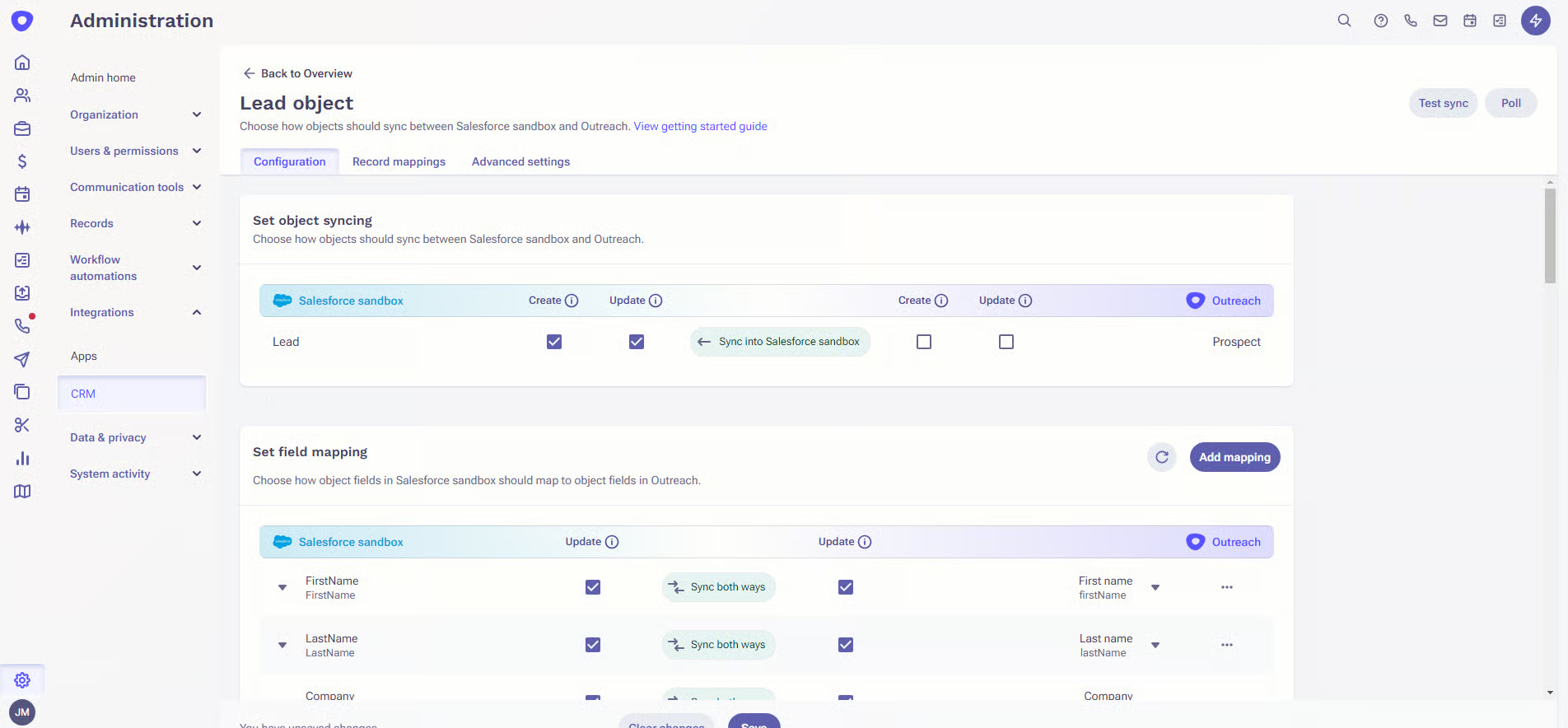
- Configure secure, bi-directional synchronization between Outreach.io and your CRM with accurate field and object mapping.
- Leverage enriched CRM data within Outreach for hyper-personalized engagement and automation triggers.
- Troubleshoot synchronization issues effectively, maintaining data integrity and compliance.
Methodology:
- Stepwise configuration guide emphasizing security and data governance.
- Use case demonstrating AI-empowered CRM data utilization.
- Inclusion of professional best practices and compliance considerations.
Content & Procedures:
The CRM as Single Source of Truth
Educational Insight: The CRM stores core customer and prospect data that Outreach.io ingests and enriches. Robust integration ensures AI models receive comprehensive, accurate data for scoring, forecasting, and personalization.
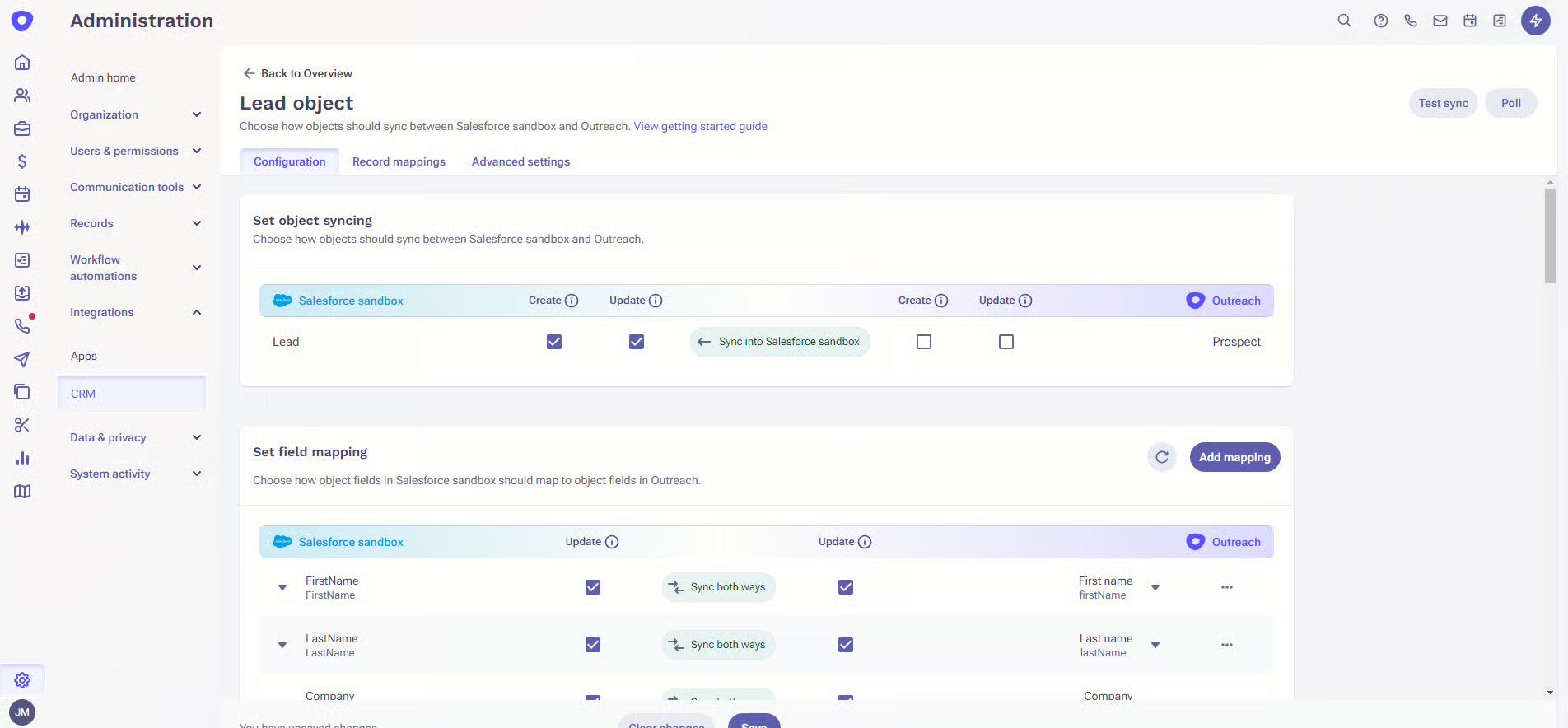
Configuring Bi-Directional Sync with Robust Data Mapping
Procedure: Under Settings > Integrations, select your CRM. Authenticate securely using protocols like OAuth 2.0. Configure mappings for Leads, Contacts, Accounts, and Opportunities diligently, verifying data types and requirements.
Leveraging CRM Data and AI Triggers Within Outreach
Procedure: Use CRM custom fields as personalization tokens (e.g., {{crm_field_product_interest}}). Set CRM automation rules to trigger Outreach sequences dynamically based on stage transitions or field updates, enabling AI-powered workflow orchestration.
Troubleshooting Sync Errors With API & Data Integrity Checks
Procedure: Regularly review Sync Logs and CRM audit trails. Confirm appropriate API limits and user permissions. Test by isolating problematic records to prevent data corruption or missed syncs.
Professional Tips & Warnings:
- Tip: Maintain rigorous CRM data hygiene for accurate AI insights. Engage sales operations and IT experts for configuration and ongoing health checks.
- Warning: API limit breaches, incorrect mappings, or insufficient permissions are common sync failure sources; monitor and resolve promptly.
YMYL Compliance: Secure data handling and accurate syncing are critical for compliance with privacy laws and data protection standards.
Practice Exercises:
- Navigate CRM integration settings and verify default mappings.
- Review sync logs and resolve sample errors.
Time Estimates: 90–120 minutes, variable with environment complexity.
Success Metrics: Ability to securely configure and sustain reliable CRM-Outreach integration.
4.2. Integrating With Marketing Automation Platforms (HubSpot, Marketo)
Learning Objectives:
- Understand seamless lead flow from marketing automation to sales engagement in Outreach.
- Configure data synchronization and activity sharing to maintain a holistic view of prospect engagement.
Methodology:
- Workflow mapping and configuration steps.
- Use case demonstrating MQL handoff.
Content & Procedures:
Bridging MQLs to Sales Engagement
Educational Component: Marketing Qualified Leads generated by platforms like HubSpot or Marketo should flow seamlessly to Outreach for sales follow-up, after meeting defined qualification thresholds.
Data Synchronization Best Practices
Procedure: Clean prospect data prior to import. Sync sales activities (email sends, calls) back to the marketing platform to enhance campaign analytics and reporting.
Example Workflow
A prospect completes a form in HubSpot → becomes MQL → assigned in CRM (Salesforce) → synced to Outreach via bi-directional CRM integration → added to a targeted follow-up sequence.
Professional Tips & Warnings:
- Tip: Collaborate with marketing teams to define clear MQL criteria to improve lead quality.
- Warning: Poorly configured flows can overwhelm sales or cause lead leakage.
YMYL Compliance: Ensure all data exchanges comply with consent and privacy regulations.
Practice Exercises:
- Identify integration points among Outreach.io, CRM, and marketing platforms.
- Map an MQL journey from capture to outbound outreach.
Time Estimates: 45–60 minutes.
Success Metrics: Ability to articulate and oversee MQL to Outreach lead flow.
4.3. Leveraging External Data Enrichment & Engagement Tools
Learning Objectives:
- Identify major external enrichment platforms integrated with Outreach.io.
- Understand how enriched data and intent signals improve targeted engagement and personalization.
Methodology:
- Overview of integration capabilities and benefits.
- Use case illustrating enhanced prospect profiles.
Content & Procedures:
Popular Integration Partners
Examples include ZoomInfo, Bombora, Apollo.io, Cognism, and LinkedIn Sales Navigator.
Integration Benefits
- Data Enrichment: Automatically fill gaps in firmographic and contact data for richer prospect records.
- Intent Data: Leverage indicators signaling purchase interest to prioritize outreach.
- LinkedIn Integration: Conduct LinkedIn messaging directly from Outreach.
Integration Setup
Typically under Settings > Integrations, follow API key/OAuth-based authorization processes for each partner platform.
Professional Tips & Warnings:
- Tip: Use intent data to warm leads, focusing sales effort effectively.
- Warning: Verify data accuracy periodically; mismatches can waste resources or cause outreach errors.
YMYL Compliance: Ensure third-party data usage complies with privacy regulations and is safeguarded via secure integrations.
Practice Exercises:
- List 3 prominent data enrichment tools that integrate with Outreach.io.
- Locate your integration settings panel.
Time Estimates: 30–45 minutes.
Success Metrics: Ability to manage and leverage data enrichment integrations responsibly.
To compare Outreach.io with other leading platforms, check out our detailed Outreach.io Top Alternatives and Competitors comparison.
Part 5: Real-World Use Case Implementations
5.1. Automated Post-Webinar Follow-up Campaigns
Learning Objectives:
- Plan and execute segmented, scaled follow-up sequences for webinar participants and no-shows.
- Automate lead scoring and nurture to boost conversion rates.
Methodology:
- Stepwise campaign design with AI scoring integration.
- Use case data linking outreach to measurable outcomes.
Content & Procedures:
Data Import and Segmentation
Procedure: Upload attendee and registrant lists. Tag prospects by attendance status and engagement metrics (poll responses, Q&A participation).
Designing Targeted Sequences
Attendees:
- ‘Thank You' email with recording link and resource sharing.
- Follow-up email focusing on key takeaways and personalized demo offers.
- Call task for direct engagement.
No-Shows:
- Email highlighting webinar benefits and recording access.
- Final ‘last chance' email with consultation offer.
AI-Powered Lead Scoring for Nurturing
Use AI to prioritize follow-up for non-attendees demonstrating engagement with content or resource pages.
Business Context & Measurable Outcomes: Effective nurturing boosts demo bookings, enhances lead-to-opportunity conversion, and improves engagement scoring.
Resource Requirements: Webinar data, Outreach.io sequence setup, and lead scoring configuration.
Practice Exercises:
- Outline and build attendee targeted sequences.
- Develop segmentation rules based on engagement analytics.
Time Estimates: 60–90 minutes design plus ongoing execution.
Success Metrics: Improved engagement and conversion following webinar events.
5.2. New Feature/Product Launch Campaigns
Learning Objectives:
- Prepare multi-channel outreach plans targeting specific audience segments.
- Leverage personalization with CRM insights to drive adoption.
Methodology:
- Use case illustrating campaign design and execution.
- Tutorial integration emphasizing personalization.
Content & Procedures:
Target Audience Segmentation
Procedure: Segment based on usage history, industry vertical, customer tier, and prior engagement level.
Designing a Multi-Channel Sequence
Example Sequence:
- Email announcing product features and benefits with explainer links.
- LinkedIn message to key decision-makers referencing the announcement.
- Follow-up email emphasizing ROI or relevant use cases.
- Personalized calls for high-value prospects.
Personalization with CRM Data
Use CRM-held insights (existing product usage, pain points) to tailor messaging for maximal relevance.
Business Context & Measurable Outcomes: Drive feature adoption, upsell revenue, and customer engagement with new offerings.
Resource Requirements: Product collateral, segmented contact lists, CRM access, Outreach.io sequences.
Practice Exercises:
- Develop a 4-step multi-channel launch sequence.
- Identify CRM data points useful for personalization.
Time Estimates: 60–90 minutes for planning, ongoing implementation.
Success Metrics: Adoption rates and engagement analytics meeting defined goals.
5.3. Account-Based Selling (ABS) Workflow With Outreach.io
Learning Objectives:
- Define and deploy Account-Based Selling strategies using Outreach.io features.
- Identify, segment, and engage multiple stakeholders within key accounts.
- Leverage multi-threading to orchestrate synchronized outreach.
Methodology:
- Strategic use case with advanced platform functionality.
- Tactical guidance for multi-contact, multi-channel engagement.
Content & Procedures:
Identifying Target Accounts
Procedure: Use Outreach.io's Account Intelligence or external tools to select target accounts based on firmographics, technographics, and strategic importance.
Building Multi-Channel, Multi-Threaded Cadences
Procedure: Construct sequences targeting multiple contacts within an account simultaneously, each with tailored messaging reflecting their individual roles.
Example Cadence:
- Email to Contact A introducing role-specific value proposition.
- LinkedIn message to Contact B focusing on departmental benefits.
- Calls to key contacts for relationship building.
- Executive summary email to decision makers.
Personalizing Content for Accounts
Use account-specific case studies and tailored messaging based on research and CRM insights.
Business Context & Measurable Outcomes: Increased deal velocity, win rates, and average deal sizes through focused and coordinated account engagement.
Resource Requirements: Defined target account list, sales development resources, account-focused content, Outreach.io sequences.
Practice Exercises:
- Select a target account and identify 3 key personas.
- Design multi-thread engagement tactics for each persona.
Time Estimates: 90–120 minutes planning, continuous execution.
Success Metrics: Demonstrable progression of target account engagement and pipeline movement.
Part 6: Productivity Hacks and Expert Insights
6.1. Maximizing Efficiency With Productivity Hacks
Learning Objectives:
- Learn effective techniques to increase daily throughput with Outreach.io.
- Automate repetitive workflows while preserving personalization.
Methodology:
- Practical tips and shortcut recommendations.
- Insightful integration with sales workflow.
Content & Procedures:
Batch Processing for Large Tasks
Use bulk import and bulk update actions to optimize prospect management.
Automation for Repetitive Tasks
Set up auto-sequences and leverage AI-generated drafts; automate task creation based on engagement.
Leveraging the Template Library
Create, save, organize, and share email and sequence templates with clear naming conventions.
Keyboard Shortcuts
Familiarize with hotkeys such as Ctrl + Shift + N for new sequences, speeding workflow navigation.
Professional Tips & Warnings:
- Tip: Schedule weekly template reviews to maintain relevance.
- Warning: Avoid excessive automation that dilutes human connection—build in personal touches, especially for enterprise prospects.
Practice Exercises:
- Identify and automate one repetitive sales task.
- Create and test a reusable email template.
Time Estimates: Ongoing.
Success Metrics: Increased daily active tasks and time saved.
6.2. Expert Tips and Personal Insights
- “Outreach.io's real power lies in its adaptability. Test custom logic and integrations tailored to your sales process.”
- “Balance automation with human interaction to avoid impersonal communication, especially in high-value accounts.”
- “Maintain impeccable data hygiene. Dirty data undermines automated campaigns and AI efficiency.”
- “Continuously analyze sequence performance—prune poor performers to sharpen outreach.”
YMYL Compliance: Transparency about risks and operational best practices reflects responsible professional guidance.
Part 7: Troubleshooting Framework and Support
7.1. CRM Synchronization Issues
Problem: Leads or activities fail to sync between Outreach.io and CRM.
Solutions:
- Review bidirectional field mappings for data type consistency.
- Verify API limits and user permissions; consult CRM admins.
- Examine sync logs in Outreach and CRM for error details.
- Isolate problematic records by testing synchronizations individually.
- Perform manual resyncs if needed.
YMYL Compliance: Accurate synchronization prevents data loss critical for compliance and sales integrity.
7.2. Email Deliverability and Engagement Problems
Problem: Emails land in spam or have unexpectedly low engagement.
Solutions:
- Validate SPF, DKIM, and DMARC configurations with external tools.
- Review content for spam triggers (excessive caps, links, words).
- Confirm personalization tokens are populated correctly.
- Audit sequence logic for proper timing and conditions.
- Monitor sender reputation (Google Postmaster Tools).
- Regularly clean contact lists.
YMYL Compliance: Failure to maintain deliverability poses reputational and regulatory risks.
7.3. AI Feature Anomalies and Configuration Issues
Problem: AI produces irrelevant suggestions or inaccurate scoring.
Solutions:
- Verify input data quality feeding AI.
- Review AI configuration and ICP definitions.
- Allow AI training periods after changes.
- Use feedback tools to teach AI correct preferences.
- Escalate complex issues to Outreach.io support.
YMYL Compliance: Transparency regarding AI limitations is crucial to manage expectations and maintain compliance.
For answers to common questions about the platform, visit our comprehensive Outreach.io FAQs page.
Part 8: Learning Progression and Resources
8.1. Structured Learning Paths
- Beginner: Core features, simple sequences, basic CRM connection.
- Intermediate: AI Agent, dynamic sequencing, conversation intelligence.
- Advanced: Complex integrations, AI optimization, A/B testing, ABS.
8.2. Practice Exercises and Community Engagement
- Run a 30-day AI campaign on a test list.
- Design multi-channel sequences for ICP personas.
- Analyze call insights using Kaia.
- Configure prospect scoring models.
Join the Outreach User Community to share best practices and engage in learning events.
Part 9: Outcome Measurement Framework
9.1. Implementation Success Metrics
- Time saved and reduction in manual errors.
- Volume and quality of personalized outreach.
- Improved prospect engagement rates and conversion metrics.
- Demonstrable ROI from AI-driven sales workflows.
Conclusion: Mastering AI-Driven Sales Engagement in 2025
Successfully implementing Outreach.io requires a strategic blend of technical proficiency, AI optimization, and human-centered sales practices.
This comprehensive guide has equipped you with the foundational knowledge, advanced techniques, and real-world use cases necessary to transform your sales engagement strategy. From initial account setup and email authentication to leveraging AI Revenue Agents and orchestrating complex multi-channel campaigns, you now possess the tools to drive measurable business outcomes.
Remember that continuous learning, rigorous compliance adherence, and maintaining human oversight of AI-generated content are non-negotiable pillars of successful implementation. As you progress from beginner to advanced practitioner, prioritize data hygiene, test and iterate your sequences, and leverage the full power of CRM integration to create a unified, intelligent sales workflow.
The future of sales engagement is AI-powered, personalized, and data-driven—and with Outreach.io mastery, you're positioned to lead your organization into this new era of sales excellence.
For a complete overview of how Outreach.io compares in the competitive landscape, explore our Best 10 AI Sales Engagement & Outreach platforms guide and discover which solution best fits your specific business needs.




Leave a Reply